Every fall, a Fishers homeowner asks some version of the same question: is there anything worth checking before the cold really sets in. There is, and none of it takes long. A door that runs fine on a mild October afternoon can bind, tear, or refuse to move once temperatures near Hamilton County drop hard, and most of that trouble traces back to five things a person can look at in one trip around the garage.
The Bottom Seal and Threshold
Start low, at the bottom seal and the threshold underneath it. That vinyl strip is what keeps meltwater and wind out, and by late fall it has usually spent a summer softening in the heat. Press a thumb along its length. If it has gone flat, cracked, or pulled loose from the door panel near a house off Cumberland Road or 116th Street, it will not seal against a freeze and needs replacing now, not in January.
Meltwater That Refreezes Overnight
A driveway that slopes even slightly toward a Fishers garage lets afternoon runoff collect right where the door meets the concrete. Overnight temperatures drop below freezing and that puddle turns solid, gluing the bottom seal to the slab. Homeowners who hit the remote and walk away often come back to a door straining halfway up, the opener drawing hard against ice it cannot break. Chip the ice loose before running the door again, and check the threshold for a rubber bead that has torn away.
Grease That Has Gone Stiff
A door frozen to its own threshold is not a stuck door, it is a glued one. Meltwater that seeps under the bottom seal during a thaw refreezes overnight and bonds rubber to concrete. Forcing the opener against that bond is how a bottom seal tears loose or a bottom bracket bends. If a door near Geist Reservoir or Britton Ridge feels stuck on a cold morning, warm the seal line before running the opener again.
Force Settings Pushed Out of Spec
Grease that worked fine in September behaves differently once temperatures drop. Lubricant on the torsion spring, rollers, and hinges thickens in the cold and stops doing its job, which means more drag on every part that moves. A door that has gone slow or noisy is often just fighting stiff grease, not failing outright. Wiping old grease off and applying a fresh, light coat before the first freeze keeps that drag from building.
An Opener Straining Against Ice
Thickened grease does not just slow a door down, it changes what the opener has to do to move it. An opener pulling against extra drag draws more current and can push its own force setting out of spec without anyone touching a dial. That is usually the quiet cause behind a door that reverses on its own or closes with a harder bang than it used to near a home along Allisonville Road.
Washing Salt Off the Track
Check the force setting itself before winter, not after something breaks. Most openers let a homeowner watch the door open and close through a full cycle and judge whether it is straining. A door that groans partway up or slams down the last few inches is telling you the setting no longer matches how the door actually moves in the cold, and leaving it alone invites a stripped gear later.
Bottom Brackets Under Winter Load
While the door is open, look at the photo eye sensors low on each track, near where road salt collects. A haze of de-icer film across either lens can make a door refuse to close, or close and reverse for no visible reason. Wiping both lenses clean is a two-minute job that solves a surprising number of the closing complaints that show up around Fishers once salt starts riding in on tires.
Salt Working From the Floor Up
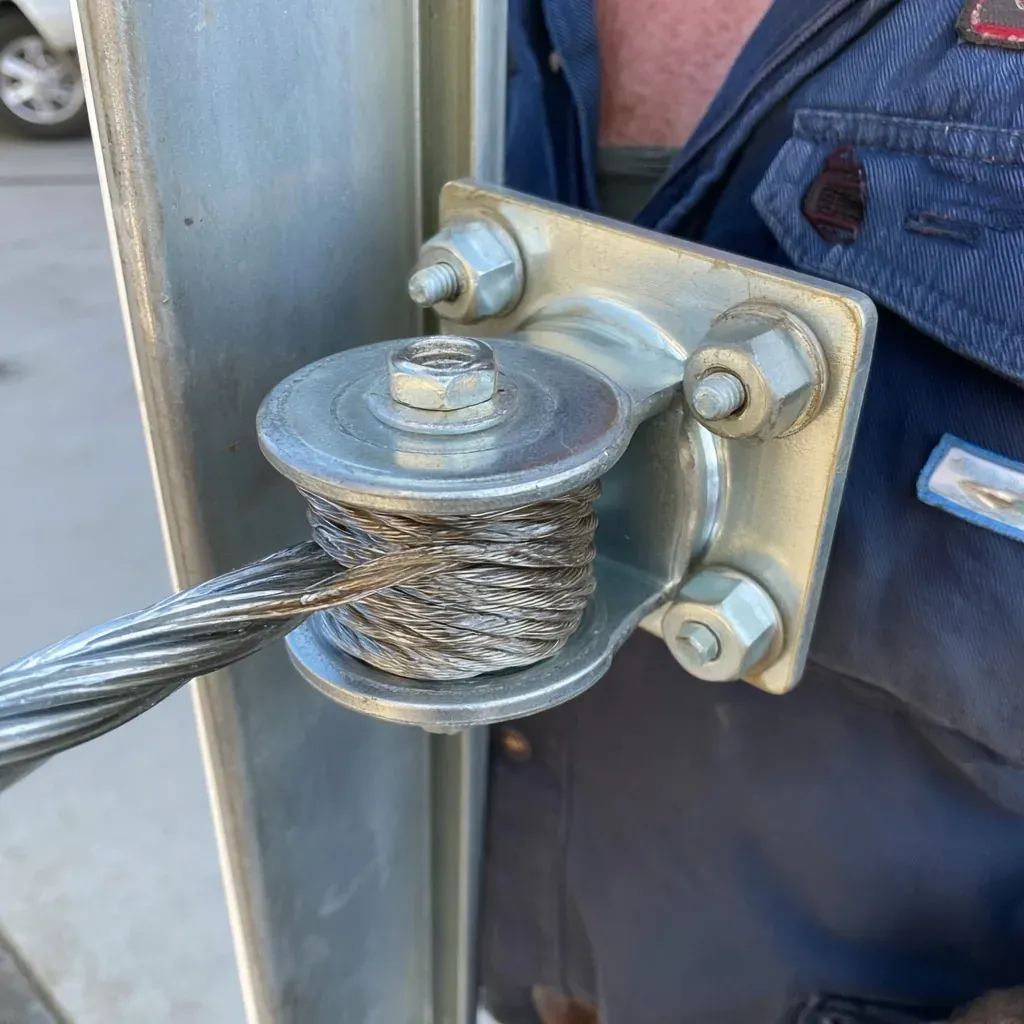
Road salt riding in on tires around Fishers settles on the slab and stays there through the cold months, working on the bottom seal, the bottom brackets and the lowest rollers before it ever reaches the rest of the door. Streets off 116th Street and Allisonville Road get brined repeatedly through a hard winter, and that brine tracks straight into the garage. Rinsing the bottom track and brackets before a freeze keeps that residue from sitting against bare metal all season.
Signs the Cold Is Winning
The torsion spring deserves a look too, though not a hands-on one. Cold makes spring steel more brittle, and a spring that was already worn from a summer of normal cycling is more likely to snap on a cold morning than a mild one. A homeowner can watch the door's motion and listen for a new creak or grinding sound near the spring, but the spring itself is tensioned steel and not something to adjust alone.
Why This Differs From Summer Heat
None of these five checks takes more than a weekend afternoon, and doing them before the first hard freeze near Fishers District or Nickel Plate Trail means a door that opens the same way in January as it did in October. Skip them and the first cold snap tends to expose whichever one got missed, usually at the worst possible hour.
Questions Homeowners Still Ask
None of this means every door in Fishers fails by February, but it does mean the parts that seal, lubricate or strain against ice are working against the season all winter. A door that closes slow, groans on the way up, or has a seal frozen flat against the threshold near Geist Reservoir or out toward Cyntheanne Park is telling you something specific happened, not just that it is old. Catching it before the next freeze is cheaper than catching it during one.
Dealing with this in your home?
Fishers garages sit on slabs that go through the same freeze and thaw all winter, and meltwater from a sunny afternoon on Cumberland Road or 116th Street refreezes overnight into a bond between door and concrete. Force it and the bottom seal tears. Road salt tracked in off I-69 does the rest, working the bottom brackets and rollers from the floor up.