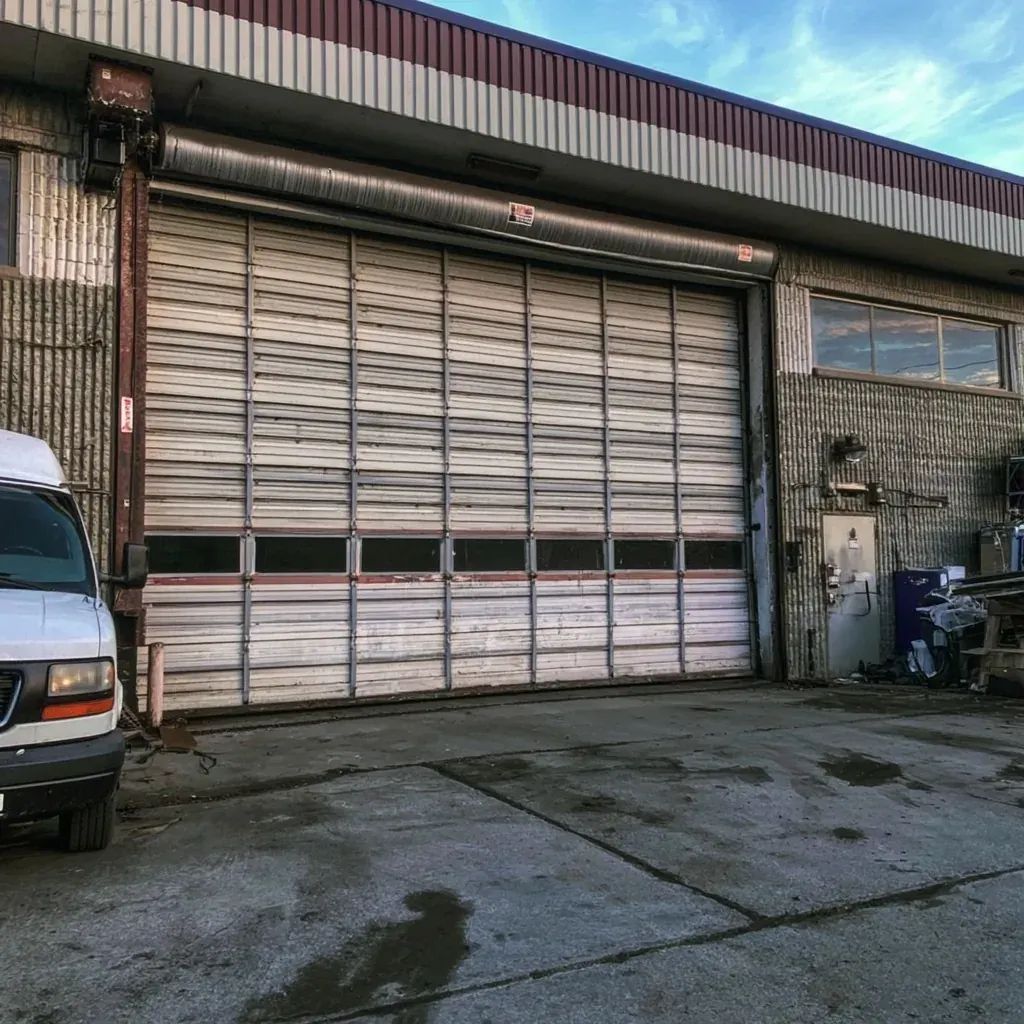
Annual Garage Door Tune-Up Plan for Fishers, IN
What gets checked, why Fishers winters shorten the interval, and why this is not a subscription.
An Annual Tune-Up Plan is a yearly inspection covering springs, cables, rollers, tracks, and opener reversal on a Fishers garage door, timed to catch what a hard freeze or road salt wears down before a part gives out.
What a Tune-Up Is Actually For
A tune-up is a scheduled look at a Fishers garage door before something in it quits. A technician runs the door, listens for the grind of a dry roller, checks how the springs hold the weight, and adjusts what has drifted out of position since it was installed. It is not a repair and nothing gets swapped out as part of it. If a cable strand is fraying or a hinge is cracked, that gets written up and priced separately. The point is catching what winter and road salt have already started before it ends in a door stuck at the slab.
There is no plan behind this and nothing that renews on its own. A Fishers homeowner pays for one visit, that visit happens, and no future date gets locked in by booking it. This is not a quarterly service like a pest contract, it is one inspection scheduled when it makes sense, whether that is after a hard winter near Geist Reservoir or before one sets in along 116th Street.
- One paid visit with no renewal date attached. Booking it does not create an ongoing agreement, and nothing about a Fishers door commits a homeowner to a next appointment or a fixed yearly schedule.
- An inspection with adjustments to hardware already on the door, not a repair. A cracked hinge, a frayed cable, or a corroded track bracket gets identified and quoted as its own job rather than fixed on the spot during the visit.
- A chance to catch a cable fraying or a roller binding before a Fishers cold morning turns that into a door frozen shut or a spring that snaps.
What Gets Checked
The checklist runs the full system rather than isolating one suspect part, because a door near Cumberland Road or off Allisonville Road that feels fine at the opener button can still be one worn cable away from a problem. The technician moves from the top of the track down to the bottom seal, testing balance, hardware, and wear points against what a properly adjusted door should do at each stage.
- Spring tension and balance get tested with the opener unhooked, watching whether a Fishers door sits steady at waist height or slides toward the slab on its own, a sign the springs have lost the strength to hold the weight.
- Cables and pulleys, checked for fraying, rust starting at the bottom where road salt collects, and uneven wear between the two sides.
- Rollers and hinges, felt by hand for flat spots, cracking, or a bearing that has gone stiff, which happens faster here once cold-weather grease thickens and stops moving the way it should.
- Tracks, checked for alignment and cleared of grit and the white road salt residue that works up from the slab near Lantern Road and Olio Road driveways over a winter of plowed streets.
- Bottom seal and threshold, checked for the gap that lets meltwater and road salt track in off tires and refreeze overnight, which is what bonds a door to the slab on a cold Fishers morning.
- The opener's auto-reverse and force settings, tested with an object set in the door's path to confirm the door backs off contact rather than continuing to close against it.
- Fasteners along the track, header, and jamb, snugged after a year of cycling loosened them, along with hinge pivots checked for the metal fatigue that shows up after enough freeze-thaw cycles.
- Cables and their end fittings, checked at the drum and the bottom bracket for the fraying or rust bloom that road salt carried in on tires tends to start at the floor, not partway up.
Why Once a Year Is Different Here
Manuals write their service intervals for a mild, dry climate, and Fishers does not stay in that range most of the year. Winters here bring hard freezes that stiffen grease into something closer to wax and can bond a door to the slab overnight through refrozen meltwater at the threshold. A door on 116th Street or near Ritchey Woods Nature Preserve works against that resistance every cold morning whether anyone notices or not.
Road salt is the other local factor, and it does not arrive through the air the way it would on a coast. It comes in on tires and boots and settles at floor level, where it works on the bottom bracket, the track, and any exposed hardware from underneath. A once-a-year check catches that corrosion and the cracking it causes in weatherstripping before either one turns into a bigger repair.
- A hard freeze after a slow meltwater drip can bond the bottom of the door to the slab overnight, and a tune-up catches the seal wear that causes it before the next cold snap does the same thing again.
- Grease that lubricates fine in September turns thick and slow by January, and a technician replaces it with a lubricant rated for cold rather than waiting for a customer to notice the door straining on a Hague Road morning.
- A February thaw in Fishers refreezes overnight, and that meltwater cycle is harder on a spring than the manual's yearly assumption allows for. Road salt tracked off Allisonville Road adds rust at the floor line faster than a dry-climate schedule expects, so the yearly tune-up earns its keep here.
Book a Tune-Up
There is nothing to diagnose beforehand. A homeowner off Cumberland Road or near the Nickel Plate Trail who has noticed the door groan going up, or just wants it looked at before the cold sets in along 116th Street, can book the same visit. The technician finds what is loose, dry, or out of balance and works through the full checklist regardless of what prompted the call.
- Manuals are usually written assuming a moderate climate with no de-icing salt involved, which is not what a door near Olio Road or 116th Street deals with from November through March.
- Road salt tracked in on tires and boots settles at the threshold every winter, working into the bottom bracket and cable ends faster than a season with no de-icer would ever produce.
- Repeated freeze-thaw cycles stiffen grease and embrittle spring steel more than a single steady winter would, which is why a Fishers door often needs a look sooner than the manual's interval suggests.
What The Tune-Up Covers
- One visit, paid for once. There is no plan running in the background and no follow-up gets scheduled automatically. A Fishers homeowner calls again next year, or whenever the door starts telling them it needs it.
- There is no contract to sign and no ongoing charge. The Annual Tune-Up is a single scheduled inspection, booked whenever a homeowner decides it is due.
- Road salt tracked in on tires, not airborne dust, is the wear factor that matters most around Fishers, and it works on the door from the floor upward.
- There is no coastal story here. Fishers sits nowhere near an ocean, so salt air and marine corrosion play no part in what a tune-up is checking for.
- Winters bring real hard freezes, not just an occasional cold snap, which is why brittle spring steel and thickened grease matter more here than in a milder climate.
- Meltwater that refreezes overnight can seal a door to the slab. The annual check catches the seal wear behind that before it happens on a cold morning.
Frequently Asked Questions
Is a tune-up a recurring plan I get billed for?
No. This is one visit in Fishers that gets scheduled and paid for on its own. There is no membership, no recurring charge, and nothing that renews without the homeowner calling again. Some households book one every year because of how fast Hamilton County winters stiffen grease and dry out seals, but that is a choice made each time, not a standing arrangement.
How often does a Fishers garage door need service?
Once a year is the general guideline, but Fishers winters push some doors toward a check sooner than that. A door that froze to the slab or struggled through several hard-freeze mornings on Hague Road or in Britton Ridge may be worth inspecting again before the next scheduled year is up.
Does road salt really wear out a garage door?
Yes, though the mechanism differs from a dusty climate. Fishers road salt travels into the garage on tires and boots, then sits at the threshold where it corrodes the bottom bracket and cable ends from the floor up. Combined with hard-freeze mornings that thicken grease and stiffen spring steel, wear shows up earlier than the manual assumes.
What does the technician actually check?
No, it is a single scheduled visit rather than a recurring plan. Fishers homeowners deal with hard freezes and road salt working up from the floor, which is different wear than a milder climate produces, so most doors here hold up better checked yearly than left until something actually stops working.
Ready to schedule a tune-up visit?
Call to schedule a single annual inspection visit for your Fishers garage door, with a written list of what was checked and adjusted.
Call (317) 740-1539