Commercial Maintenance Contracts
For Facility Managers
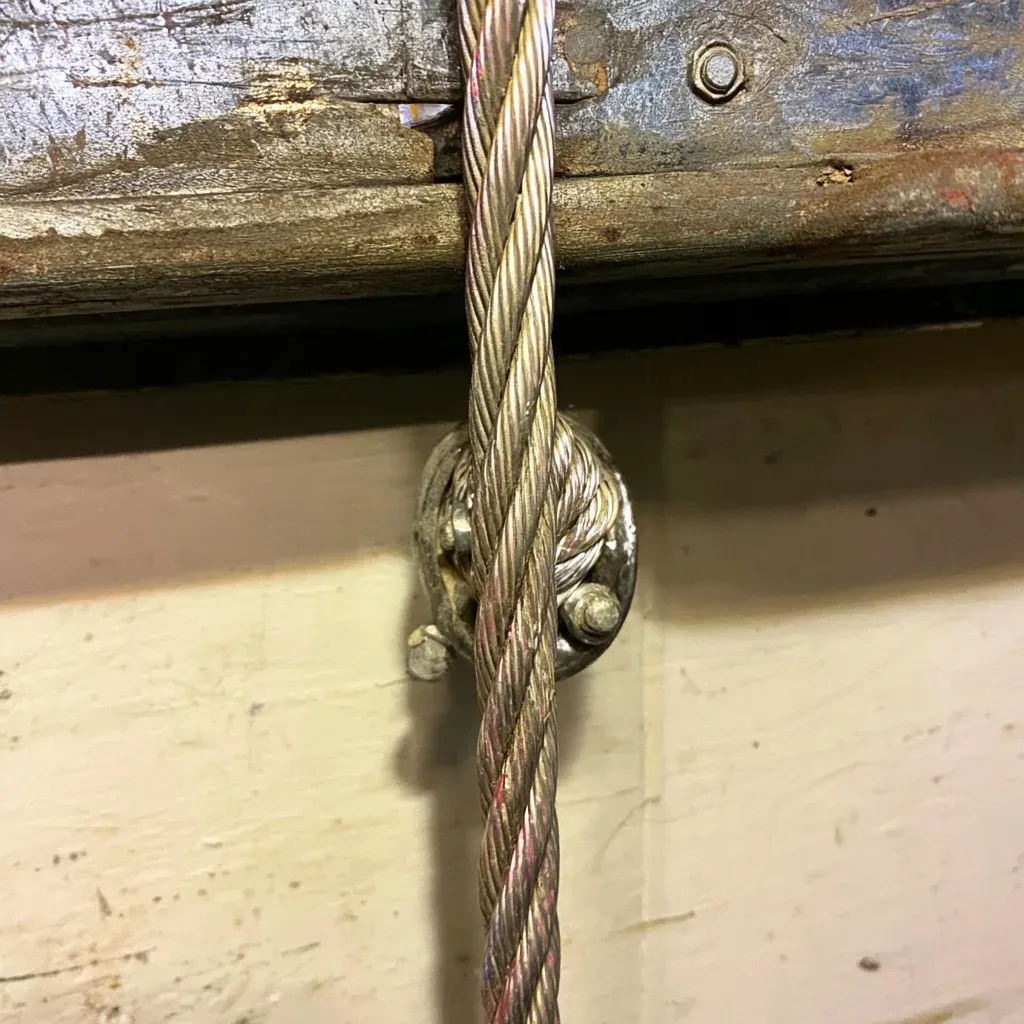
Bumpers, levelers and seals sized to daily forklift and trailer traffic near Fishers loading bays.
A loading bay door in Fishers is judged on cycles and documentation, not looks. The leveller bridges the trailer gap, bumpers absorb forklift hits, and seals and shelters keep winter cold and road salt out of the bay.
A dock door on a Fishers distribution building near Crosspoint Boulevard or Southeastern Parkway does not behave like a garage door on a house off Allisonville Road. It runs dozens of cycles in a shift, takes a trailer backing into the bay, and answers to a schedule instead of one household's patience with a slow morning.
Facilities along the I-69 corridor and out toward USA Parkway move freight against appointment windows, and a dock door stuck half open holds a trailer at the bay instead of letting it pull out for the next stop. That is a line on somebody's dispatch board, not just an inconvenience for whoever happens to be home.
That puts the leveler, the bumpers, the seal or shelter, and the door panel itself under one test: how many cycles they log before something binds, and how long a bay near Crosspoint Boulevard or Southeastern Parkway sits idle waiting on a part. A facilities manager in Fishers tracks that idle time in dollars, not curiosity, because a stalled bay backs up trucks on the whole dock schedule.
Dock bumpers take the abuse first. A trailer backing toward a bay near Crosspoint Boulevard rarely lines up square on the first try, and the bumper is bolted there to take that contact instead of the frame or the door track absorbing it. Once a bumper compresses flat or cracks loose from its mounting, the next miss lands somewhere more expensive.
Forklift damage builds instead of announcing itself. A track rail knocked out of true, a curtain panel dented from the inside, a bumper shoved an inch off its bolt pattern, each one small enough to wave off in the moment. Add them up over a few months of loading and the door starts binding on a track that used to run clean.
| Part | Wear Pattern | Inspection Point |
|---|---|---|
| Leveler stuck mid-cycle | Hinge pin or lip binding | Hinge and lip service, lubrication |
| Bumper pad crushed flat | Trailer backing in too fast | Bumper pad and bracket replacement |
| Leveler lip won't sit flush | Hinge pin worn from daily cycling | Lip hinge service and pin swap |
| Panel skin caved in | Pallet jack or forklift fork strike | Section replacement on the affected panel |
| Door drags or binds mid-cycle | Track bent from a trailer clipping it | Track straightening and roller inspection |
| Shelter fabric torn at the corners | Repeated trailer contact over many cycles | Fabric panel and frame repair |
| Cold air pouring in at the floor | Seal compressed flat, apron settled unevenly | Seal replacement and threshold adjustment |
| Opener motor working harder than it should | Spring undersized for the daily cycle count | Spring resizing to match actual use |
A dock leveller in Fishers earns its wear at the hinge and lip, the two points that flex every time a forklift crosses from a trailer bed onto the warehouse floor. Each pass loads that hinge pin a little more, and the lip drags slightly against the trailer sill on the way down. A bay running two shifts near USA Parkway puts thousands more cycles through that hinge in a year than one that only sees a delivery truck twice a day.
Dock bumpers take the compression every time a trailer backs in, and they wear from the middle out, not the edges, so a bumper can look fine from six feet away while it has already lost most of its give. A dock seal or shelter closes the gap around the trailer once it is parked, and in a Fishers winter that gap is where heated air leaks out and meltwater blows in sideways.
None of a dock's parts fail in isolation. A torn shelter around the opening lets grit and Fishers winter grime track onto the leveller hinge, and a hinge that starts to bind changes how hard the plate drops onto the next trailer bed. A seal gone stiff at the edges lets cold air past the shelter and onto the leveller mechanism itself, so one worn part quietly speeds up wear on the next.
An impact door swaps the ordinary rigid panel for a curtain, slatted or solid, built to absorb a forklift strike and flex back into shape instead of denting. A standard steel panel takes that same hit and stays bent, and a bent panel binds against its track guides on every open and close after that. For a bay handling constant fork traffic off Crosspoint Boulevard or Southeastern Parkway, that difference decides whether one bad strike means a repair or a replacement.
Forklift damage does not always announce itself on the curtain or panel. A strike hard enough can rack the frame or twist a mounting bracket while the door itself still looks straight, and a racked frame throws the door out of alignment on the next cycle. A facilities manager in Fishers who only checks the visible face of the door after a bump can miss the frame damage that ends up costing more once the track starts binding.
Swapping a dock door or leveler for one that fits the same opening is routine work in Fishers, and the City of Fishers building department does not usually need to sign off on it. Cut a new opening in a Crosspoint Boulevard or Southeastern Parkway warehouse wall, or widen an existing one to take a bigger trailer, and that is a different matter entirely. Ask the city before the crew shows up, since it is their call to make, not the pros doing the install.
Since Indiana issues no state license for this trade, the paperwork worth asking for is different: proof of general liability insurance, workers' compensation coverage if the crew has employees, and a scope of work in writing before anyone touches a spring or a leveler. The Indiana Attorney General's office is where a facility can take a complaint if a contract goes bad.
Duty cycle is the number that gets ignored until a dock door in Fishers fails on a schedule nobody expected. Hardware sized for a house door, opened a handful of times a day, cannot survive a bay running two shifts with a forklift waiting on every cycle. A spring rated for light residential use wears out in months instead of years when it is asked to do dock-door work, and it fails without much warning.
A scheduled inspection is what catches wear before it becomes a stoppage: a bumper crushed flat under its rubber skin, a seal torn loose at one corner where wind off an open bay keeps working at it, or a leveler lip that has started to hang up instead of dropping clean onto the trailer bed.
Before a technician leaves a Fishers dock, get the invoice to show what actually changed: the spring size and its rated cycle life, the measured condition of the bumpers and seal, and whether the shelter was checked for tears. A written note on hinge wear on the leveller matters too. Without that paper trail, the next inspection has nothing to compare against, and small wear gets missed until it becomes a stuck door.
Steel spring wire loses flex as it loses heat, and a coil that flexed fine in October can snap outright once temperatures stay low for days running. The break usually comes on a Monday, after a stretch of use the wire could no longer absorb.Bridgewater, Britton Falls and Delaware Point. Ask anyone here which morning the spring finally gave out and most name a stretch in January or February, the coldest run of the year. Grease that quit flowing days earlier left the torsion spring carrying load it was never built to hold alone, and the metal let go rather than bent.
Winter road treatment rides in on the tires of every car in the driveway and settles at the base of the door all season. It works upward from there, corroding the bottom brackets and lowest rollers first, which is a different failure path than rust that starts anywhere else on the door.A price here assumes a standard residential door on an attached Fishers garage, the kind that shares a wall with heated space off streets like Lantern Road or Cumberland Road. A commercial bay door, a wider opening or panel-lift hardware at a business near Crosspoint Boulevard runs a different parts list and a different labor estimate entirely. Full guide bands are on the pricing guide, and the commercial overview covers how a scheduled program works.
For Facility Managers
Fishers Roll-Up Doors
Fishers Commercial Doors
Ask what liability coverage and workers compensation cover the crew before anyone works a lift or stands under a raised door on your dock. Ask for the scope of work in writing before the truck leaves, naming the parts replaced and the spring or hinge spec used, so a Fishers facilities manager has something to check against later.
That depends on cycle count, but as a working baseline the pros check the leveler at each scheduled visit rather than waiting for a trailer to hit it wrong. In Fishers, freeze and thaw at the dock lip matters as much as forklift traffic: refrozen meltwater under the lip plate keeps it from seating flush, which strains the hinge and the hold-down next time a loaded pallet jack crosses it.
Dock seals here take more from freeze and thaw than from anything else. Meltwater that refreezes overnight stiffens the rubber at the bottom edge, and a stiff seal cracks the first time a trailer backs in hard against it. Road salt tracked in off Fishers streets works into that cracked seal from the floor up and speeds up the damage.
Road salt tracked in on truck tires and forklift wheels through a Fishers winter settles at the base of the door, where it works into seal foam, corrodes bumper mounting bolts and pits track hardware from the floor up. A dock that gets hosed down or swept after salt season holds its seals and bumpers longer than one where salt is left to sit through spring thaw.
A leveler lip that drags or a door that binds at the track means downtime a facility can't absorb. Get the licensed pros we connect you with out to Fishers to look at it.
Call (317) 740-1539