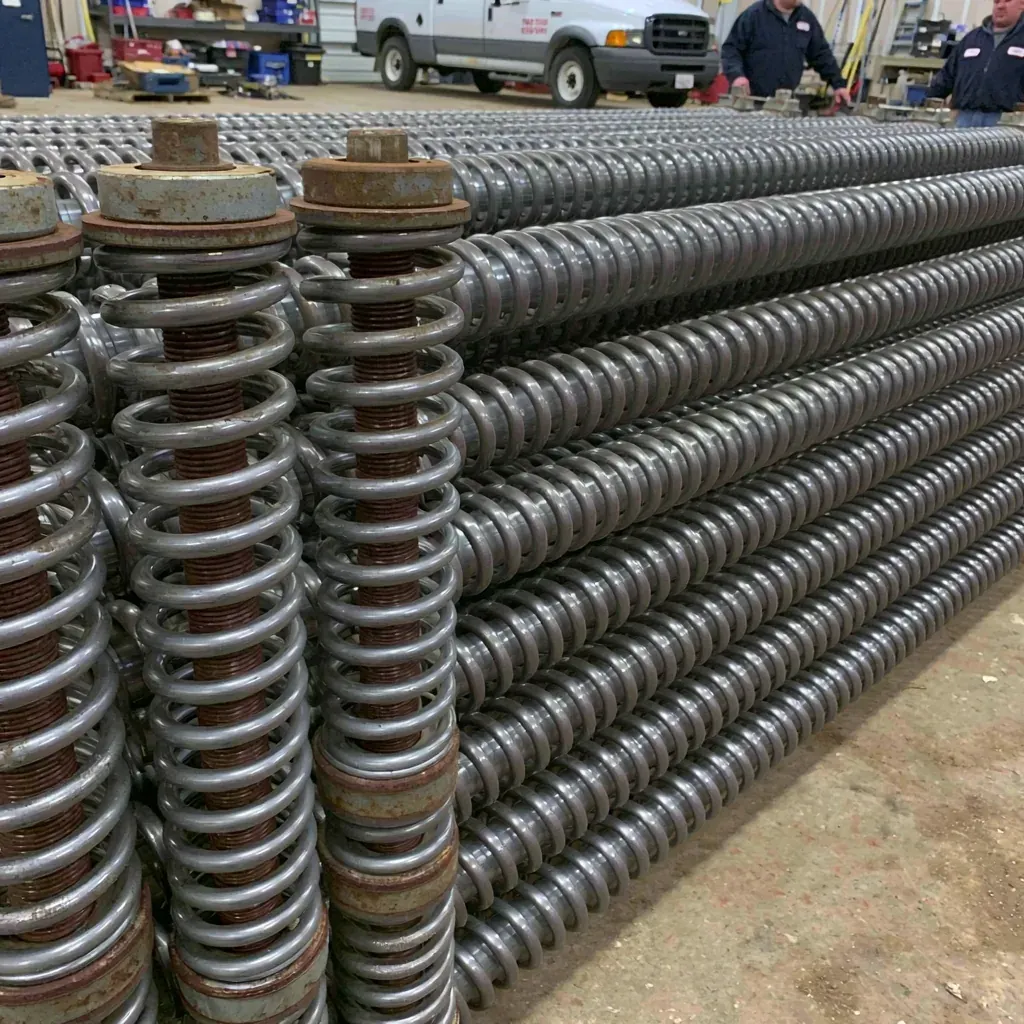
Two Cycles a Day Wear Parts Faster
Fishers attached garages, common along the I-69 corridor from Sunblest to Britton Ridge, share a wall with living space, so a door with no core loses heat straight through it every winter night, not just on the coldest ones.
Fishers garages sit under bedrooms and beside mudrooms often enough that heat loss through the door matters. An insulated sectional door keeps that shared wall from turning cold to the touch in January, which is why so many replacements around Sunblest and Ridgefield step up in R-value rather than staying with a single layer of steel.
Winter changes what a spring is made of, mechanically speaking. Torsion steel that flexes fine in July turns brittle once temperatures drop hard, and the snap tends to happen on the coldest push of the season, first thing in the morning.
When a Door Bonds to the Slab
- Core
- Polystyrene is a rigid foam board fitted between the skins; polyurethane expands and cures inside them, sealing every seam for a higher R-value per inch.
- Weight
- A foam-core panel outweighs a plain steel one, so torsion spring tension has to be recalculated, not just kept the same as before.
- Opener
- A chain drive from a 1990s or 2000s install can strain against the added weight; a belt drive sized to the heavier door is the usual fix.
- Best fit
- Garages next to a den or laundry room, or under a bonus room, as in Britton Falls layouts, get the most benefit from added R-value.
- Trade-off
- More weight means more load on springs, cables, and rollers over the door's life, not just a higher price the day it goes in.
- Time Of Year
- Fishers winters, not summers, are what make the R-value argument here. That 63 degree annual swing means a plain steel skin moves and cools a shared wall fast, while cold nights near a hard freeze push the case for a core with a real thermal break.
- Typical Job
- an estimated $899–$4500
What a Stuck Slab Bond Feels Like
An insulated door gets mistaken for one that simply feels heavy or thick-skinned. Thickness alone does not tell you what is inside the panel. A door can look substantial and still be one plain steel sheet, with no polystyrene or polyurethane doing any work behind it. A thick-looking panel does not tell you what is inside it. What matters is sandwich construction, two steel skins with a foam core bonded between them, versus a single skin with nothing behind it. Tap the surface and thickness alone still will not answer that question for you.
Why a Door Freezes Shut to the Slab
Swapping in a heavier panel means the torsion spring gets resized to match, not carried over from the lighter door it replaced. Skipping that step leaves an opener straining every time the door moves, which shortens both parts' working life.
Two foam types get used here: polystyrene, a rigid board slid into the panel, and polyurethane, foamed in place so it bonds to both steel skins and fills the frame too. Polyurethane runs a higher R-value per inch, which matters most on the wall shared with Fishers High School area homes' finished bonus rooms.
A door that has stopped closing all the way in January is not always a sensor problem. Refrozen meltwater under the bottom seal can hold the door a half inch off the slab, and the opener reads that gap as an obstruction. The fix starts at the threshold, not the wiring.
TRACK ALIGNMENT AND WHAT REPEATED FREEZE AND THAW DOES TO IT
| What Gets Done |
What's Happening |
|---|
| Spring steel that flexes fine in July gets brittle once temperatures drop hard, and a torsion spring under full tension is exactly the part that snaps first on a cold morning rather than easing into failure with any warning. | Fishers homeowners notice it first on a January morning: the opener strains, the chain jerks, and the door lifts an inch before stalling. That extra draw usually means grease inside the rollers has thickened past the point of doing its job, not that the motor itself is dying. |
| A 63 degree swing between winter and summer keeps steel expanding and shrinking all year. Fasteners work loose, panel seams open a hair, and a track that lined up perfectly in July can bind in February without anyone touching it. | Hardware that opens and closes on a schedule shows its wear in predictable places, not all at once. A tune-up catches the part that has quietly loosened, the roller that has started to bind, the sensor lens that has drifted out of alignment, before any of it turns into a call placed from a cold driveway. |
| A door that won't budge after an overnight freeze is usually stuck to the concrete by refrozen meltwater at the threshold, not broken. Trying the opener anyway strains the drive gear and can bend a track. Warm the bottom edge first and check for ice before running it again. | Meltwater from a warm afternoon has a way of refreezing under a garage door by morning. Force the door anyway and the bottom seal tears loose or a bracket bends, and now the opener is straining against a door that was never actually stuck, just bonded to the slab. |
The Legal PositionIndiana does not run a state license for garage door installers, so Fishers homeowners judge a pro by insurance and by how they answer questions, not by a number to look up. Ask what the door install includes and whether the opener was checked against the new door weight before work starts.
Reading The Sound A Spring Makes
Weight, not insulation, is the risk. A foam-core panel can run near double a plain steel door's weight, and a torsion spring sized for the old door will fail early or snap outright under the added load.
The Repair That Turns Into A Replacement
Clearing a track or swapping a bottom seal is within reach for most Fishers homeowners. Matching a torsion spring to a heavier panel, or judging whether an opener can handle the added weight, is where a wrong guess snaps cable or strips a gear.
Reading What Road Salt Left Behind This Season
The case for an insulated door in Fishers is the space it borders. A den wall or a bonus room above the garage, common in Ridgefield and Windermere floor plans, loses comfort straight through an uninsulated panel. Foam-filled sandwich construction with a real thermal break keeps that adjoining room closer to the rest of the house.
One call gets a pro looking at it.
Expect an estimated $899 to $4500 for insulated garage doors here, with size and how far it has spread doing most of the moving. What is priced here is the hardware and the labor to fit it: springs, cables, rollers, hinges, the bottom seal, opener parts and panel repair. Damage to the building itself is quoted separately once somebody has actually looked at it, whether that is a jamb softened by years of meltwater or a slab edge spalled under the threshold. Find out the visit charge up front, and ask for the scope in writing. Full bands and what moves them are on the pricing guide, and the service that handles this is New Garage Door Installation.